Mudfish DNS Client
Mudfish DNS is a free app that encrypts DNS requests: the address lookups your device makes before connecting to a website. It can help when a network blocks or changes DNS answers. Encrypted servers are already configured, so you can start with the default settings.
With the default settings, Mudfish protects DNS lookups without changing your public IP address or routing all your traffic through Mudfish VPN. Optional Web traffic protection on Windows and Linux can also help with some website blocks; see Web protection.
This guide covers the new Mudfish DNS app. Instructions for the older
muddnsc.exe client, its -w option, and manual 127.0.0.1 setup do not apply.
Installation
Get the current installer from the Mudfish DNS download page. That page lists the available releases and download requirements.
| Platform | Installation |
|---|---|
| Windows | Install the x64 MSI on Windows 10 version 2004 (build 19041) or later, then open Mudfish DNS from the Start menu. Setup needs internet access if it must install WebView2. |
| Linux | On Debian or Ubuntu, install the .deb package using your package installer, then open Mudfish DNS from the applications menu. |
| macOS | Install the Apple Silicon app from the DMG on macOS 13 or later. At first start, allow background operation and approve the system extension and DNS Proxy when macOS asks. |
| Android | Install the APK on Android 8.0 or later. Allow installation from the app you used to download it if Android asks, then open Mudfish DNS. Approve the VPN permission when starting DNS. |
A fresh installation starts with DNS protection stopped. Installing the app or opening its window does not turn protection on.
If you have the Windows 0.1.0 EXE installer version, remove it through Apps & features before installing the MSI. Its saved settings are preserved.
If you previously set your network adapter's DNS to 127.0.0.1 for the old
client, restore your usual DNS settings before using the new app. Stop the old
client as well, so it does not compete for the same DNS port.
Start and stop DNS
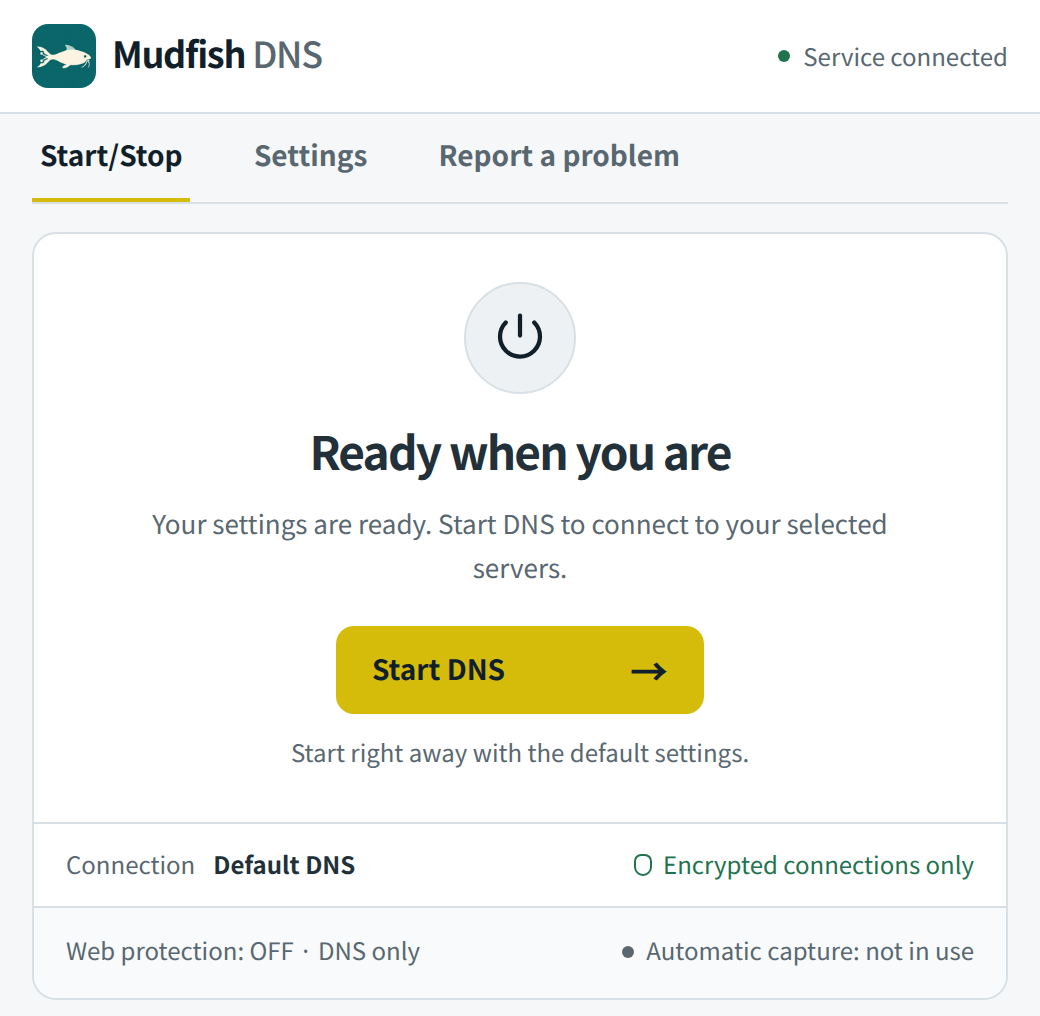
- Open Mudfish DNS and select Start/Stop.
- Select Start DNS. Complete any operating system permission prompts.
- Wait for DNS is running, then browse as usual.
- To turn protection off, select Stop DNS. On Windows and Linux, this restores the system DNS settings that Mudfish changed. On macOS, it disables the DNS Proxy. On Android, it stops the app's VPN connection.
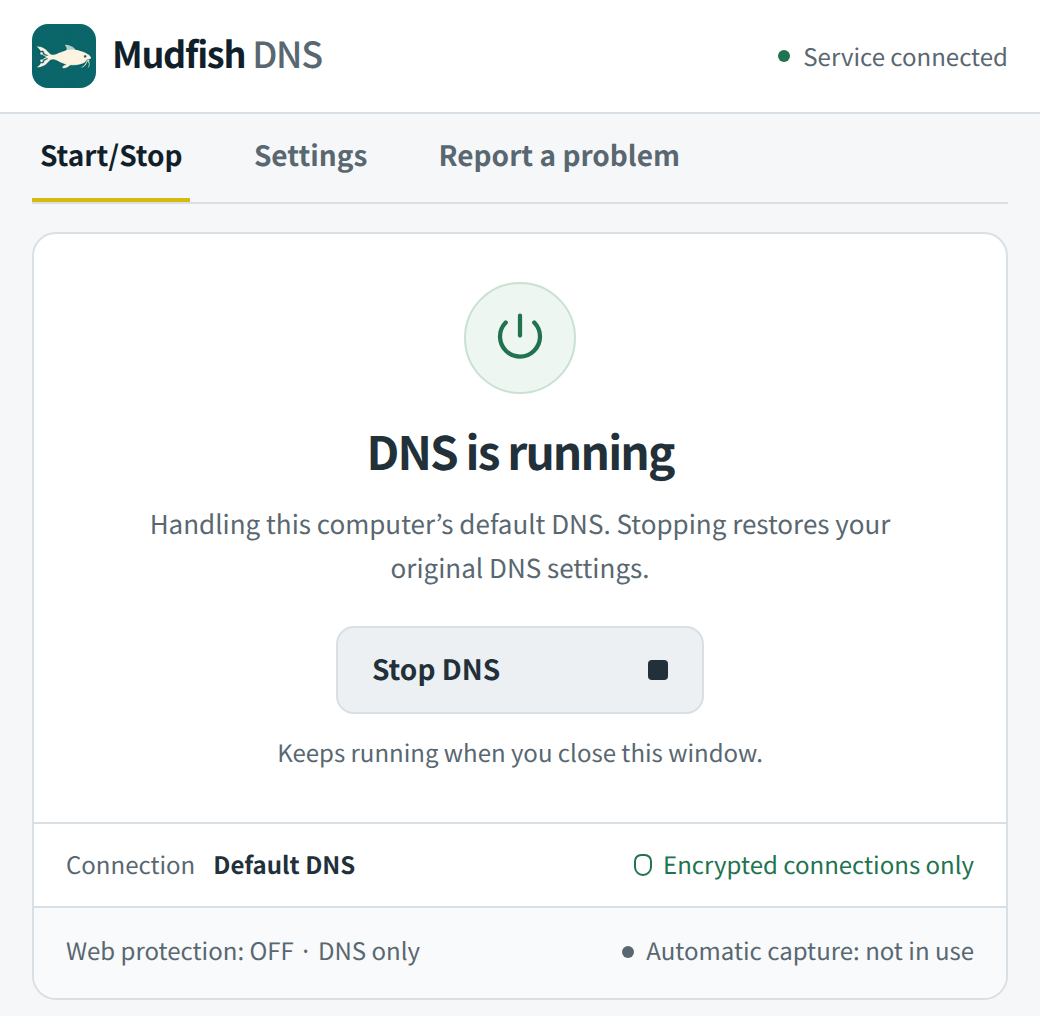
On desktop, closing the window hides it in the tray. Even Quit window and tray leaves DNS running. Reopen the app or use the tray's Stop command to turn it off. On Android, leaving the app screen also keeps protection running.
On Windows and Linux, enable Settings → Start DNS when this computer starts and select Apply settings to start protection at boot. On macOS, starting DNS keeps it enabled after quitting the app or restarting the Mac; use Stop DNS to disable it.
Android uses a local VPN connection to handle traffic and cannot run alongside another VPN. This VPN permission does not mean your traffic is sent through a remote Mudfish VPN server.
Find the right guide
| What you want to do | Guide |
|---|---|
| Choose DNS providers, DoH/DoT, or Mudfish relays | DNS servers |
| Change DNS capture or use a SOCKS5 proxy | Connection settings |
| Enable optional web protection on Windows/Linux | Web protection |
| Select apps or add domain exceptions on Windows/Linux | App and domain rules |
| Clear cached answers, manage history, or reset settings | Cache, history, and reset |
| Fix a connection problem or send a diagnostic report | Troubleshooting |
Developers extending the service can refer to Native modules.